Airbnb vs Long-Term Rental in Paphos: Which One Suits You?
Short-term vs long-term rental in Paphos, compared honestly: income, workload, own use, legal rules and tax, plus a short list of questions to help you decide.
Published on 6 min read
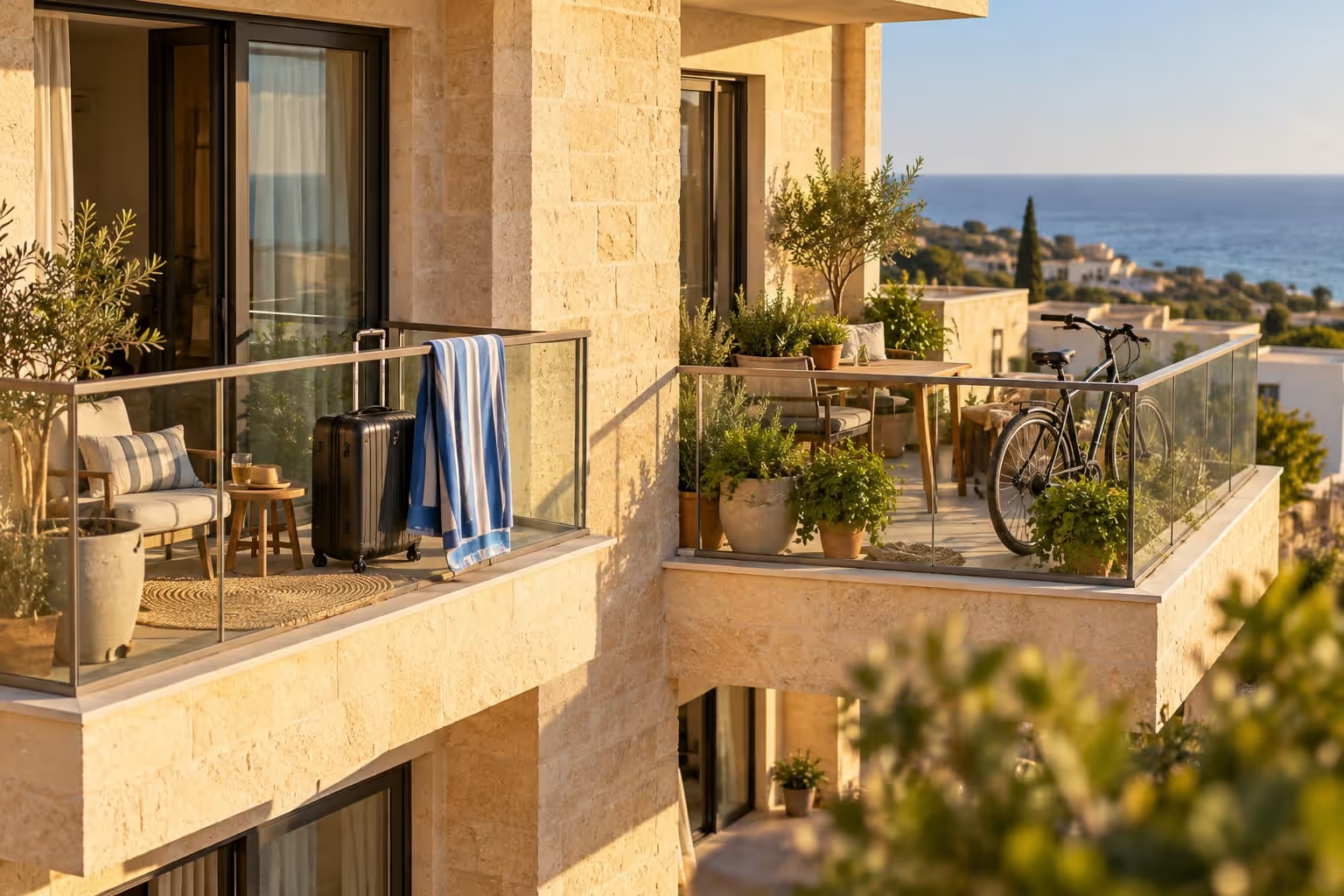
Almost every conversation we have with owners in Paphos gets to this question sooner or later: Airbnb or long-term rental? Both are legitimate choices, and the honest answer is that it depends on the property, on your situation and on what you expect from it. Anyone who recommends one without asking a few questions first usually has a reason of their own.
We manage holiday rentals in Paphos ourselves, so we know the short-term side well. Even so, we don’t recommend it to everyone. Below we go through the criteria that actually matter, without dressing anything up, and finish with a short list of questions that should make the decision easier for you.
A quick definition first. Short-term rental in Cyprus means letting a self-catering property to guests by the night or the week, usually through platforms such as Airbnb or Booking.com. Long-term rental means letting the property as someone’s home under a tenancy agreement, typically for a year or more.
Income: potential versus predictability
This is usually the first question, and it’s where the two models differ most. With a long-term tenant you know in January roughly what will be in your account in December. Twelve months of rent, minus a few repairs.
Short-term rental has more room upwards, but the income moves around. The main season in Paphos runs from about April to October, and in those months a well-run apartment can earn considerably more than a monthly rent. Winter is quieter, although the mild climate brings winter guests from Northern Europe and the UK.
A purely illustrative calculation with made-up assumptions: Say a two-bedroom apartment achieves an average of EUR 90 per night at 55 % occupancy over the year. That’s roughly 200 nights and about EUR 18,000 in gross revenue. From that you deduct platform fees, cleaning, laundry, electricity and water, management and VAT. The same apartment let long-term at, say, EUR 900 a month brings in EUR 10,800 a year with far lower running costs. Whether the extra effort pays off depends heavily on location, furnishing and how professionally the place is run. These figures are invented to show the logic, not to describe the Paphos market.
Workload and wear
Who does the work?
Long-term is quiet. Find a tenant, sign the contract, take the occasional call about the air conditioning. You can handle that from abroad, provided you have a local tradesman you trust.
Short-term is a business. Answering enquiries, adjusting prices, arranging check-ins, cleaning between two bookings on the same day, restocking towels, dealing with a review you don’t like. If you want to do this yourself, you should either live in Paphos or have a lot of free time. The alternative is an agency that runs the operation on a commission basis. Then what’s left for you is essentially reading the monthly statement.
Wear and tear
Lots of guests means lots of suitcases, showers and key handovers. A short-term apartment gets used harder, but it’s also cleaned and checked after every stay, so small damage shows up immediately. With a long-term tenant you might see the property once a year, and what you find then depends on the tenant. Airbnb’s AirCover offers some host protection, which helps, but it doesn’t replace your own liability insurance.
Flexibility: own use, vacancy, selling
Do you still want to stay there?
Short-term wins this one outright. You block the weeks you want to spend in Paphos in the calendar, and the apartment is yours. With a long-term tenant, the property effectively belongs to them for the duration of the contract. For many owners living abroad this is the deciding factor, because they bought the place partly to use it themselves.
Vacancy and selling
Both models have vacancy risk, just in different shapes. In short-term, a quiet January is normal and already priced in. In long-term, an empty month between two tenants hurts, but it’s rare.
When it comes to selling, short-term is more flexible. You close the calendar from a certain date and hand the apartment over empty, or you sell it as a going concern with reviews and future bookings. A property with a sitting long-term tenant is harder to sell, often only to buyers who want to be landlords themselves.
Short-term vs long-term rental in Cyprus: legal rules and tax
Registration and tenant protection
For short-term letting, Cyprus has had a clear rule since Law 9(I)/2020: every self-catering accommodation let short-term must be entered in the register of the Deputy Ministry of Tourism. Registration costs EUR 222, is valid for three years, and requires among other things a building or planning permit (or a sworn declaration) and liability insurance. The registration number must appear in every listing. Letting without it can lead to fines of up to EUR 5,000. Helping with this registration is part of what we do.
Long-term letting has no such registration. Instead, tenancy law applies, with its protections for tenants. Ending a long-term tenancy because you want to sell or move in yourself is not something that happens overnight, and depending on the contract and the circumstances it can take a while. If you let long-term, have the agreement checked by someone who knows Cypriot tenancy law.
Tax, in broad strokes
Both are rental income and are subject to Cypriot income tax. The big difference is VAT. Short-term accommodation counts as a tourist service in Cyprus and is taxed at the reduced rate of 9 % once you pass the registration threshold of EUR 15,600 in annual turnover. Long-term residential letting is VAT exempt. Valid as of September 2026, please verify. This isn’t tax advice, and the rules change; Cyprus is implementing a tax reform right now.
The hybrid model: short in summer, long in winter
There is a third way that works well in Paphos. Let short-term from April to October, then let to winter guests for three to five months. Plenty of Northern Europeans and Brits spend the winter here and look for exactly this kind of apartment. For you it means strong summer income, reliable winter occupancy and fewer turnovers in the quiet months. You still need the ministry registration, because in summer you are a short-term host.
Five questions to help you decide
- Do you want to use the apartment yourself, and if so, how often a year?
- Do you need a fixed monthly sum, or can you live with fluctuations?
- Is the property where guests want to be (Kato Paphos, Coral Bay, the coast), or more in a residential area?
- Who looks after things locally when you’re not there?
- Are you planning to sell in the next few years?
If you answer a clear yes on own use, location and flexibility, the case for short-term is strong. If predictability and peace of mind matter more, long-term. And if you want a bit of both, look at the hybrid model.
In short
- Long-term gives you predictable income and little work, but no own use and little flexibility.
- Short-term has more potential and more effort, and you can use the place yourself.
- Short-term requires registration with the Deputy Ministry of Tourism (EUR 222, three years) and 9 % VAT above EUR 15,600 turnover.
- Long-term residential letting is VAT exempt, but tenant protection applies.
- The hybrid model of summer short-term and winter long-term is a real option in Paphos.
If you’re not sure which model suits your property, just talk to us. We’ll look at the location and the furnishing and tell you honestly what we’d do in your place, even if the answer is long-term. Send a no-obligation enquiry or go back to the blog overview.
Common questions on this
- Can I rent my Paphos apartment short-term in summer and long-term in winter?
- Yes. Many owners host holiday guests from roughly April to October and then let the place for a few months to winter guests from Northern Europe or the UK. Registration with the Deputy Ministry of Tourism is still required, because the summer part is short-term letting.
- Is there VAT on long-term rental in Cyprus?
- Long-term residential letting is exempt from VAT in Cyprus. Short-term accommodation is taxed at the reduced rate of 9 % once annual turnover passes the registration threshold of EUR 15,600. Valid as of September 2026, please verify with a tax adviser.
- Do I have to register my apartment for Airbnb in Cyprus?
- Yes. Since Law 9(I)/2020, every self-catering accommodation let short-term must be entered in the register of the Deputy Ministry of Tourism. Registration costs EUR 222, is valid for three years, and the registration number must appear in every listing.